
Example: [Jeff and Jeff, 1996]
When Nathan Radlich's house was burgled, thieves left his TV, his VCR, and even left his watch. What they did take was "generic white cardboard box filled with greyish-white powder." (That at least is the way the police described it.) A spokesman for the Fort Lauderdale police said "that it looked similar to cocaine and they'd probably thought they'd hit the big time." Then Nathan stood in front of the TV cameras and pleaded with the burglars: "Please return the cremated remains of my sister, Gertrude. She died three years ago."Well, the next morning, the bullet-riddled corpse of a drug dealer known as Hoochie Pevens was found on Nathan's doorstep. The cardboard box was there too; about half of Gertrude's ashes remained. And there was this note. It said: "Hoochie sold us the bogus blow, so we wasted Hoochie. Sorry we snorted your sister. No hard feelings. Have a nice day."
The saga of Nathan Radlich's cremated sister's remains provides an interesting illustration of the difference between a legend and a news story. On 13 May 1993, thieves broke into the Radlich home in Boynton Beach, Florida, and made off with a cellophane-wrapped package of greyish-white powder that had been kept in a fishing tackle box at the head of the homeowner's bed. Radlich's television, VCR, radio, and watch were left undisturbed by the intruders — all they appeared to have wanted was the contents of that tackle box. Detectives working the case stated they had an awful feeling about why the ashes were stolen: they suspected the powder had been mistaken for cocaine.
And there matters rest. In the real life tale, there was no bullet-riddled corpse turning up on Nathan's doorstep, no explanatory note left by the disappointed drug buyers. Even the bit about Radlich appealing on TV for the return of his sister's cremains was manufactured to make a better tale.
Well, at least were the cremains lifted because someone was fool enough to mistake them for cocaine? Barring the burglars someday stepping forward to explain the whys of their theft, we'll never know. Speculation on the part of the detectives is just that — speculation. Maybe the ashes were taken by a relative or friend who felt Gertrude deserved a better final resting place than a tackle box. Maybe they were lifted by someone curious about the nature of cremains, or by someone who for his own creepy reasons wanted to have a box of someone's ashes.
Seven years later, a news story from the United Kingdom about a break-in there gave far greater reason to believe in the specter of cocaine-snorting thieves mistaking cremains for blow. In a pot on the mantle of her Chadwell Heath, Essex, home, Dee Blyth had kept the ashes of her beloved Labrador. That pot was inscribed with the dog's name: Charlie.
Blyth's home was burgled in October 2000. She had been relieved of two television sets, a VCR, a stereo, and gems worth £2,000. During the course of the investigation, constables assigned to the case discovered the jar of doggie ashes had been tampered with.
A constable called to probe the break-in fell to laughing upon finding some of the cremains laid out in cocaine-style lines. Clearly, the intrepid thieves had thought they'd hit the mother lode with this jar labeled 'Charlie' (Brit slang for cocaine, so we're told) and had decided to help themselves to a little toot before leaving.
We've no idea how high snorting dead dog made them.
In January 2011 something similar happened at a residence in Silver Springs, Florida, where a home was burgled of electronics and jewelry, plus the ashes of the homeowner's late father and the ashes of her two Great Danes. During the investigation, detectives learned that the ashes were taken because the suspects mistook the cremains for either cocaine or heroin and that the suspects snorted some of the ashes believing they were snorting cocaine.
Could any reasonable person mistake cremains for cocaine? We don't think so, thus we're strongly tempted to dismiss all such tales as just being too far-fetched to have anything to them. But then, there are no limits to human stupidity, as the snorted dog stories above show.
In July 2013, human cremains in Tennessee were burgled by a man who thought they were cocaine, but they were not ingested by the thief. 28-year-old Billy Cantrell made off with a bag of human ashes and an Xbox from a neighbor's home, but according to his grandmother, the original tie was still on the bag of the neighbor's mother's cremated remains when it was recovered. Further, "On the top of it, it had a white piece of paper taped over it with date of birth, date of death, name and the funeral home," said the burglar's grandmother.
In August 2014, a Vietnam veteran in Alabama reported that a burglar who had broken into his home had smoked his dead wife's ashes, perhaps believing them to be cocaine. The burglar, he said, had taken the ashes from a small plastic box on the headboard of his bed and smoked them with a homemade pipe.
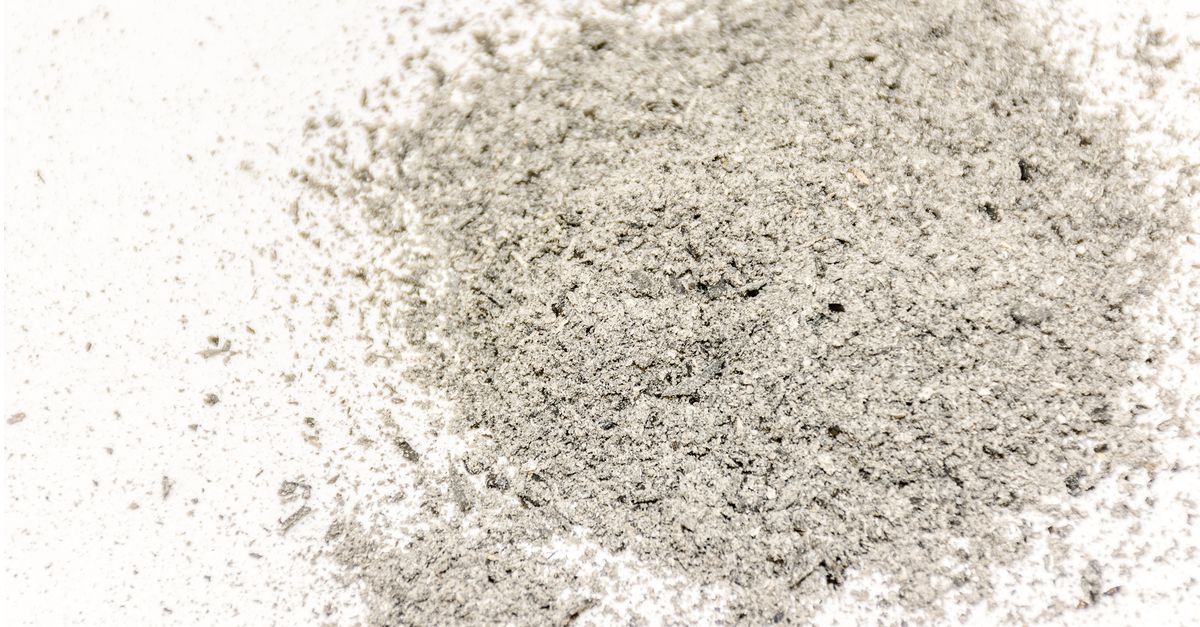
Despite what one might envision from hearing the term "ashes," human cremains are neither feathery little wisps akin to ash that might conceivably have blown from a campfire, nor an incredibly fine powder that could reasonably be mistaken for an illegal substance. Cremains vary in color from a gray-and-white mixture right down to a dark gray (charcoal), with unburnt trabecular bone (bone with an internal latticework) showing up yellow. If zinc had been used in the construction of the coffin, some of the cremains might appear slightly yellowed; if iron, green; if copper, pink. Metals in jewelry can also affect the color of the ash.
Consistency is the major factor to consider though. Unprocessed cremains are made up of bone fragments, with the resultant residue looking for all the world like used kitty litter of the gravel (not the clumping) type. This is neither a feathery ash nor a fine powder; what's left is a gravel, a substance very few would mistake for a snortable drug.
In the U.S., cremains destined for urns are generally left unprocessed. However, if a loved one expresses a desire to scatter these mortal leavings, the question of processing might well be raised by the funeral director. Processing involves the pulverization of the gravelly residue which otherwise would contain quite recognizable fragments of bone. At one time this rendering was accomplished by passing cremains through a hand-cranked laboratory grinder. Modern crematoriums use electric processors to achieve the same end, a fine granular substance. Though this more closely resembles a drug than does gray/white gravel, once again would anyone familiar with cocaine (a powder) mistake a granulated product (something that resembles sugar) for it? We think not, but then we've never been tempted to snort dead dog.
In case anyone was wondering, the average man renders out to 7.4 pounds of cremains and the average woman 5.8 pounds. The minimum recommended urn size is 175-cubic-inches, with urns topping out at 300-cubic-inches.
"Cremains mistaken for illegal drugs" is a recurring theme in contemporary lore.
A friend of a friend worked as an airline pilot and for years flew the JFK-Heathrow run. There were many amusing incidents, but one still makes him chuckle the most. He'd flown a jumbo into London, and when all the passengers had disembarked, one of the stewardesses found a small carved box under a seat. When she opened it, she found some suspicious-looking powder inside. Customs staff specially trained to deal with drug trafficking quickly arrived and one officer opened the box, licking his finger before dipping it into the powder and putting it into his mouth to taste it.
"Well, it's not a narcotic," he said, efficiently. Just then, an elderly lady tottered along the aisle and asked the stewardess if she'd happened to come across a small engraved casket. It apparently contained her husband's ashes.
Sources
Conte, Chris. "Man Steals Human Ashes, Thinks It's Cocaine." KPRC-TV [Houston]. 18 July 2013.
Healey, Phil and Rick Glanvill. "Urban Myths: 45: Suspicious Casket." The [London] Guardian. 24 July 1993 (p. 59).
Iserson, Kenneth. Death to Dust. Tuscon: Galen Press, 1994. ISBN 1-883620-07-4 (pp. 263, 270).
Jeffries, Fran. "Report: Burglar Smoked Ashes of Vietnam Vet's Dead Wife." Atlanta Journal and Constitution. 4 August 2014.
McKee, Jeff and Jeff Beck. "Jeff's Next." WRXL-XL102; Richmond, VA (Audio CD) 1996.
Moran, Lee. "Tenn. Burglar Stole Human Ashes He Mistook for Cocaine: Cops." NY Daily News. 22 July 2013.
Troup, John. "This Gear's a Bit Ruff." The Sun. 13 October 2000.
Zucco, Tom. "Floridian; Newswatch." St. Petersburg Times. 27 June 1993 (p. F3).
FOXNews.com. "Cremains Mistaken for Drugs." 18 January 2011.