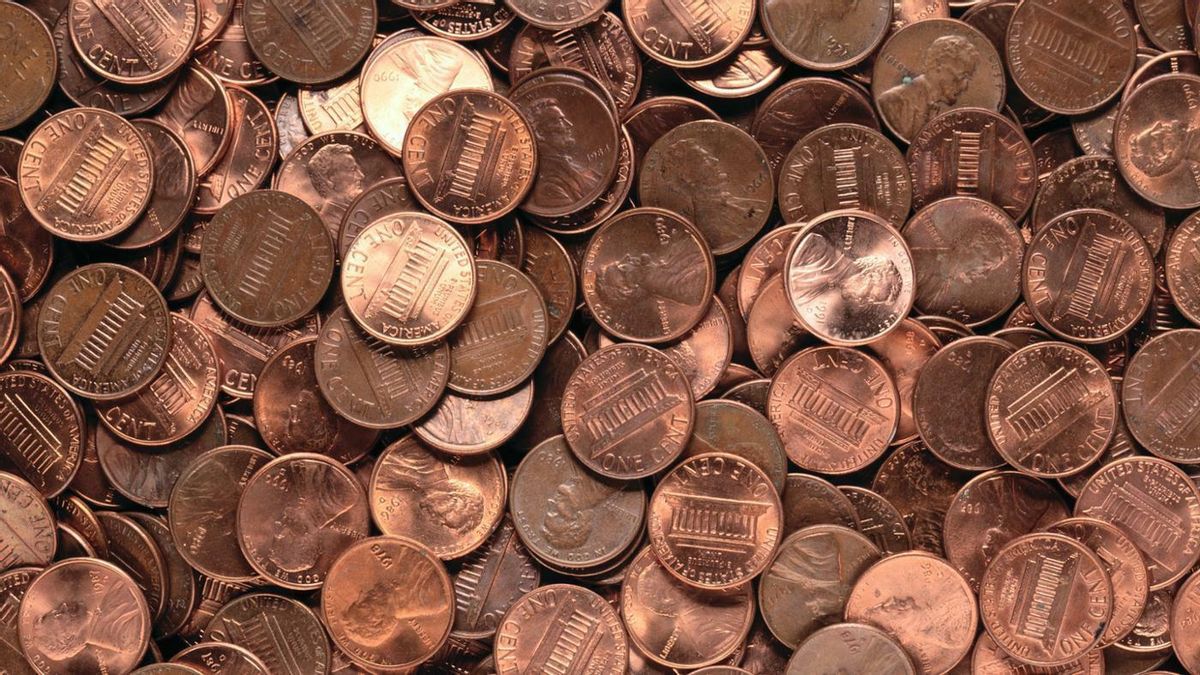

Over the years we've received numerous inquiries about how much it costs to mint a U.S. penny, usually phrased as "I heard it costs 8¢ (or 10¢ or 12¢) to make a penny — is that true? It does indeed cost more than one cent to manufacture a one-cent piece, although not quite the multi-cented disparity rumor would have it. Or, at least not yet.
(The proper name for what we all call the penny is a "cent," but we'll adhere to popular usage in this article rather than be pedants about it.)
Each year the U.S. Mint puts millions of new pennies into circulation (4.9 billion in 2011, for instance), and the cost of producing each of those pennies involves four components: metal, fabrication (pre-production metal processing), labor/overhead and transportation. Metal is largest component of this cost: the penny has been composed of 97.5% zinc and 2.5% copper since 1982, and because the price of those metals fluctuates, so too does the cost of producing pennies.
In 2005, the cost to the United States Mint to produce a penny was 0.97¢, which was just a smidge under a cent. In 2006, that year's pennies each cost about 1.23¢ to manufacture. Rises in metal prices, particularly of zinc, pushed the per-unit cost up to 1.7¢ in 2007. By 2012, production costs had risen to 2.41¢ per penny.
The current price discrepancy between the value of the metals in the coins and the value of the coins themselves has sparked a growing cottage industry of melting down cents to harvest for resale the copper and zinc they contain. The U.S. government has countered both by restricting the export of pennies and by making it illegal to melt them down. Coin melters could spend up to five years in prison for their pains.
Various ideas have been kited as to how to address the problem of rising production costs. Some folks have long held that single cents should be dropped from the roster of American coinage, with prices thereafter rounded up or down to the nearest nickel. Some have advocated minting pennies (nickels too, which also cost more to manufacture than their face value) from cheaper metals. And some have counseled holding course while waiting for metal prices to decline.
Were it not for the matter of the metal they contain being worth significantly more than the face value of coins (in these last few years), all the furor and "Say it's not so!" attaching to pennies' costing more to make than they can buy for you at the grocery store would be mere academic quibbling: A penny that cost over 2¢ to make isn't all that big of a deal once the concept of multiple use is grasped.
If pennies were used but once then thrown away, yes, of course their costing American taxpayers 2.41¢ apiece would be a horrible, horrible thing. But they're not: pennies pass through hundreds, thousands, and maybe even millions of hands before they somehow drop out of circulation, which more than covers the additional 1.41¢ that went into their manufacture. In other words, while it's a great "gosh, golly, gee" fact to fling at your friends ("Say, Joe, did you know it costs 2.41¢ to manufacture a coin that's worth only 1¢?"), all the gobsmackedness of it runs right out of that conversation stopper once you pause to ponder how many times that one penny will change hands.